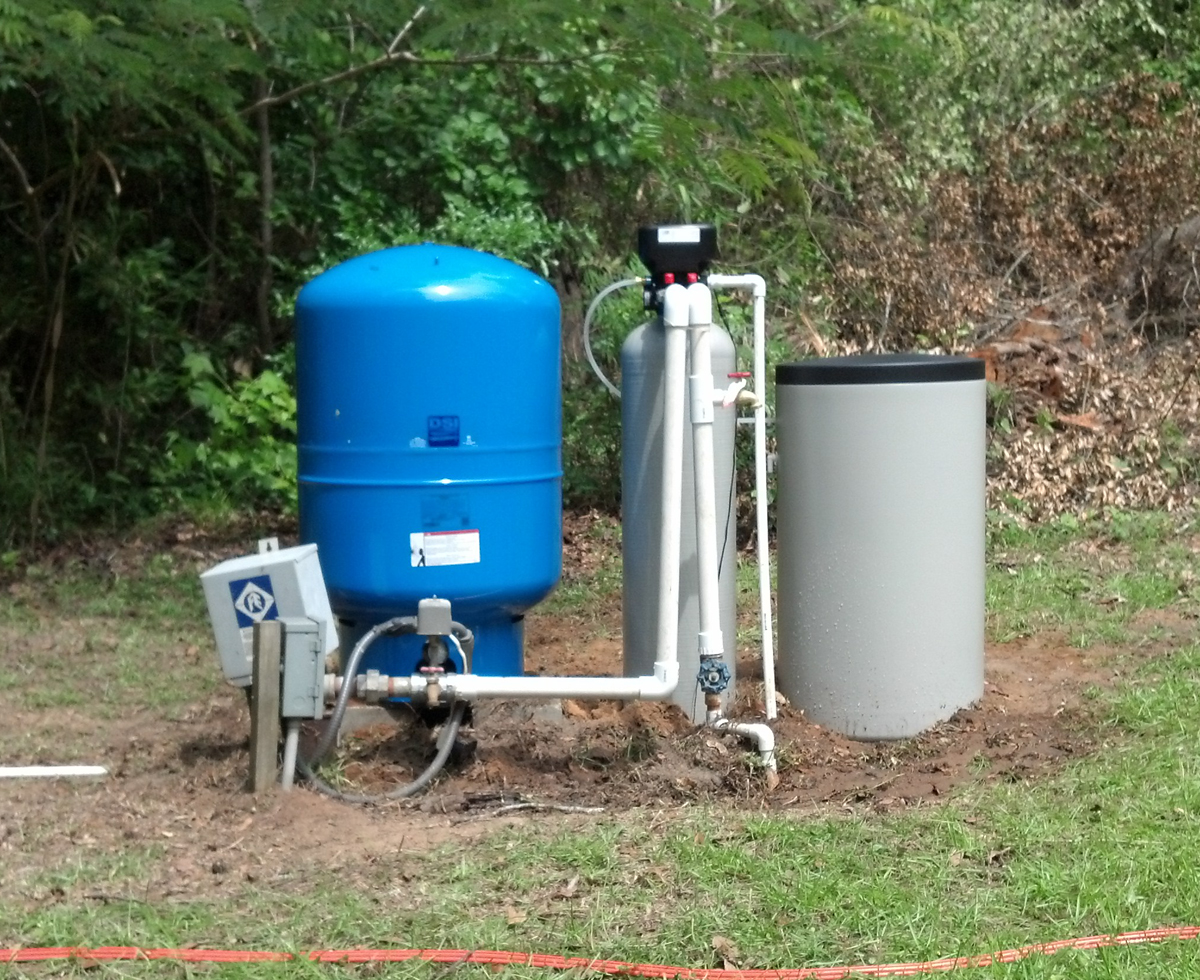
When people are looking for a well water filter, they almost always ask the wrong question: “Which one is better?” It sounds logical, but it doesn’t work that way in real life. In some homes, well water leaves rusty stains and has a metallic taste; in others, it clogs plumbing with fine sediment; in others still, it smells like sulfur even after sitting for a short time. That’s why a universal “best filter” exists about as much as a universal pill for everything.
For a private home, what matters isn’t a “flashy rating,” but whether the system matches the actual water composition and the home’s usage. You need to understand exactly what comes from the source, how many water outlets are used daily, and whether protection is needed only for drinking water or for all plumbing, appliances, and pipes at once.
Even at this stage, it becomes clear why a simple setup is enough for some, while others need a full-fledged multi-stage system. Otherwise, the purchase turns into an expensive experiment that initially promises a solution but then just sits in the basement pretending to help.
Why well water needs whole-house filtration systems
With a well, the water is rarely the same all year round. After heavy rains, more sediment can get into it; during dry periods, the mineral concentration changes; and after the system has been idle, the smell and taste are often more pronounced. Therefore, the problem isn’t limited to a single glass of water in the kitchen. Everything that comes from the source flows throughout the entire house: into the shower, the water heater, the washing machine, the pipes, and the faucets.
This is precisely why a whole-house well water filter is not viewed as a minor household item, but as protection for the entire plumbing system. If the water contains sand and sediment, cartridges, valves, and appliances suffer. If iron levels are high, rust stains appear on plumbing fixtures and an unpleasant metallic taste develops. Hard water causes scale to form more quickly, and the smell of sulfur makes normal water use uncomfortable even in places where it isn’t drunk.
Bacteria and organic matter are a separate issue. With private water sources, this risk cannot be assessed by sight alone: the water may look normal but still be unsuitable for safe use without additional treatment.
Therefore, a well water filtration system for a home should be selected not based on general advertising claims, but on the results of water analysis. This is the only way to determine whether basic mechanical filtration, iron removal, softening, a carbon stage, or a combined system is needed for the specific water composition.
Common contaminants found in well water
A well water purification system is selected not based on a general description of the problem, but on the water’s composition. In one home, the main issue is sand and suspended solids; in another, it’s iron; in a third, it’s odor, hardness, or organic matter. Therefore, it’s important to first understand exactly what you’re dealing with.
Sediment and dirt particles
Sand, silt, and fine suspended solids cause cloudiness, but that’s not the only problem. These particles clog cartridges, scratch plumbing fixtures, and accelerate wear on valves, water heaters, and household appliances.
Iron, manganese, and hard water minerals
This is precisely where iron removal from well water is most often required. Iron leaves rusty stains on plumbing fixtures and gives the water a metallic taste. Manganese causes dark spots, and hard water quickly builds up scale on heating elements and pipes.
Bacteria and organic contaminants
There are contaminants that aren’t always immediately visible. Bacteria, organic matter, and dissolved compounds share one symptom—a sulfuric odor in well water is usually associated with hydrogen sulfide or bacterial activity, and it’s best not to ignore this warning sign. Here, you need more than just cosmetic post-treatment; you need a well-designed filtration system.
Types of Whole-House Water Filtration Systems
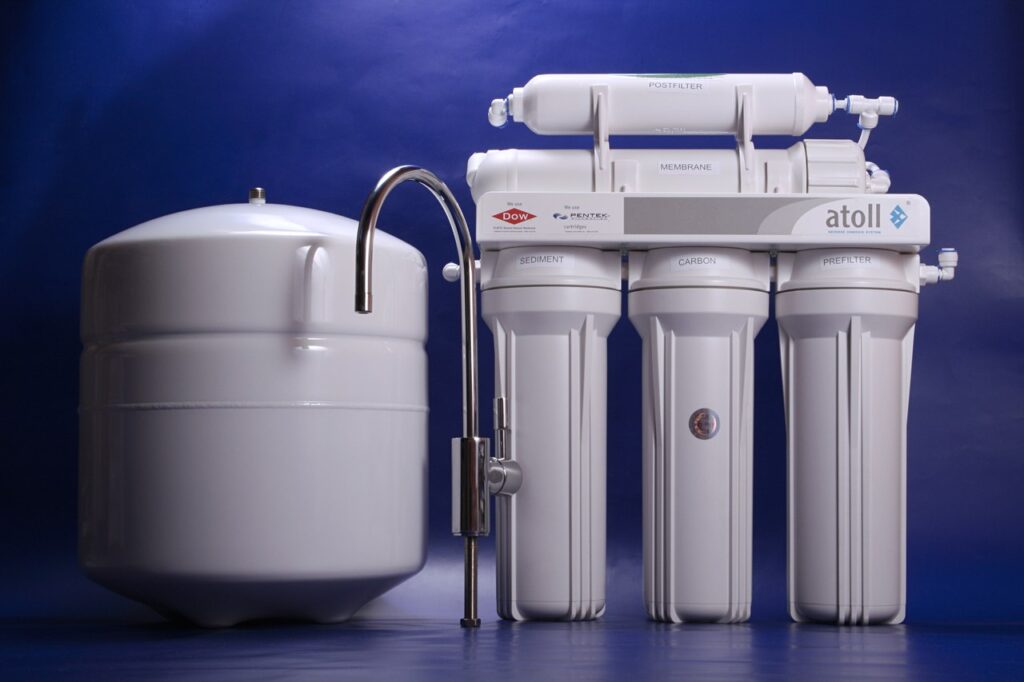
The best well water filter usually doesn’t work on its own. For a home, multiple stages are often combined because mechanical debris, odors, iron, and hardness require different treatments. And a multi-stage well water filtration system is more common than a single universal unit.
Sediment filtration systems
This is basic mechanical removal of sand, silt, rust, and other suspended solids. It protects plumbing fixtures, valves, and appliances from wear and tear.
Activated carbon filtration
Charcoal improves the taste of water, helps with odors, and partially removes organic matter. However, it has no effect on iron or water hardness.
Iron and manganese removal systems
These filters are installed where water leaves stains, has a metallic taste, and quickly stains plumbing fixtures. This is a solution based on specific water analysis.
Reverse Osmosis vs. Whole-House Water Filtration Systems
Reverse osmosis is typically installed for drinking water at a single point, while a whole-house system is installed at the main water inlet and protects the entire plumbing system, water heater, appliances, fixtures, etc. These solutions are not interchangeable but are often used together.
How to Choose the Best Filter for Well Water
The best filtration system for hard well water isn’t chosen based on the model name. First, you need to look at the water analysis: without it, it’s impossible to determine whether the water contains excess iron, hardness, bacteria, hydrogen sulfide, or just suspended solids.
Next, assess the water flow rate and the type of contamination. For example, for a large house with multiple bathrooms, flow capacity is crucial; otherwise, pressure will drop during peak usage hours. But that doesn’t mean you can skimp on a condo system. Choose wisely.
A water purification system for a private well should also be easy to maintain: how often to replace cartridges, whether regeneration is needed, and how much service and consumables cost. The budget here is calculated not only based on the purchase price but also on future associated costs.
Installation and Maintenance Issues
Even good, expensive equipment can be ruined by improper installation. A well water filtration system for the entire house must be selected based on water pressure, installation location, pipe diameter, and actual water consumption in the home. Otherwise, some equipment will operate at half capacity, while other parts will start causing unnecessary problems within the first few months.
Maintenance of the well water filtration system is no less important. Some stages require regular cartridge replacement, while others need flushing, adjustment, or load monitoring. If this is neglected, the filter doesn’t just lose its effectiveness—it becomes nothing more than an expensive decoration.
Benefits of Installing a Whole-House Water Filter
When a home water filtration system is selected based on analysis, the effect is noticeable not just at a single faucet, but throughout the entire household.
- Water for drinking and cooking becomes more consistent in taste and smell;
- Appliances last longer without excessive scale and buildup;
- Skin and hair suffer less from water hardness and impurities;
- Pipes, faucets, and plumbing fixtures accumulate deposits more slowly.
Simply put, well water ceases to be a constant household surprise and begins to function as a normal resource for the home, rather than a source of minor but regular problems.
Final thoughts – which system is right for your home?
There is no one-size-fits-all answer here: one system works well against iron and odors, another is designed for hardness, and a third is assembled from several stages based on a specific analysis. Therefore, the best approach is not to choose a filter blindly, but to first test the water composition and then select a solution tailored to your home, water usage, and budget.
At Pryde Group, you can go through the entire process without any unnecessary hassle. They’ll help you perform a water analysis, interpret the results, select the right equipment, install the system properly, and won’t leave you on your own when it comes to maintenance. And to be honest, that’s often more important than a fancy name on the filter housing.