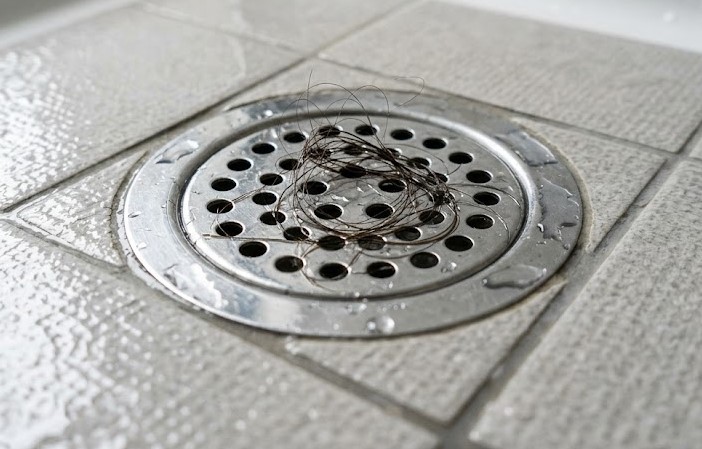
Just yesterday, the water drained away smoothly, but today it’s already pooling around my feet and doesn’t disappear until several minutes after I finish showering. More often than not, hair is to blame. On its own, it can travel further down the pipe, but inside the drain, it gets caught on the grate, rough spots, and joints.
Residues of soap, shampoo, conditioner, and skin oils quickly stick to it. This is how a few thin strands gradually turn into a dense clump that prevents the water from draining.
But how can you tell if the drain is clogged specifically by hair? And what’s the safest way to remove it if the clog is close to the opening or has gone deeper into the pipe? Are there any “home remedies” for unclogging it? How can you avoid damaging the drain? And when is it actually better to call a plumber? Let’s figure it out!
Why does hair clog the shower drain so easily?
Hair doesn’t dissolve in water and is hardly affected by ordinary cleaning products. Once it gets under the drain grate, it clings to rough spots, screws, bends, and the inner walls of the pipe.
That’s why a shower drain clogged with hair rarely forms a single large clump right away. It usually starts with a few strands, which become the foundation for further buildup.
The problem develops especially quickly in old or narrow pipes, as well as in drains with complex designs. If the shower drain is clogged with hair, the water flow presses the hair against the walls but does not push it further down. New strands get caught on those already stuck, and the free space inside the pipe becomes increasingly limited.
How Hair Causes Clogs
Individual strands intertwine and gradually form a sort of mesh. This mesh traps soap scum, lint, skin flakes, and other small debris. Once hair has clogged the shower drain, this mesh acts as a filter that allows water to flow through more and more slowly while continuing to collect new debris.
The longer the clump remains inside, the denser it becomes. That’s why it’s easier to remove hair from the shower drain at the first signs of slow drainage, while the clog is still near the opening and hasn’t had time to travel deeper into the pipe.
Why Soap and Conditioner Only Make the Situation Worse
Soap, shower gel, and shampoo leave a thin, sticky film on the inner walls. Hair conditioner and skin oils make it even thicker. As a result, the clog in the shower drain transforms from a loose tangle of hair into a viscous mass that clings tightly to the inside of the pipe.
Normal water pressure is no longer enough to flush away such a buildup. That’s why virtually all tips for unclogging a shower drain usually start with manually removing the hair, rather than trying to dissolve the entire clog with a single product.
Signs That Hair Is Clogging the Shower Drain
A hairball makes its presence known even before the drain stops draining completely. The water begins to drain more slowly, pools at the bottom, and leaves a soapy film behind.
If the shower drain isn’t draining as well as it used to, it’s best to check it right away, while the blockage is still close to the opening. As the clog becomes more compacted, other signs appear:
- Water pools around your feet while you’re showering;
- You hear gurgling coming from the drain;
- A puddle remains for several minutes after you turn off the water;
- An unpleasant odor emanates from the drain;
- When you remove the grate, you can see hair and a slimy film.
The odor occurs because soap, skin particles, and other organic debris get trapped in tangled hair. If the clog in the shower drain is already preventing water from draining, adding a deodorizer or extra cleaning agent won’t solve the problem. You’ll have to physically remove the clump from the pipe.
The Best Ways to Remove Hair from a Clogged Shower Drain
The cleaning method depends on where the clog is located. Hair near the drain grate can be removed with a simple plastic hook, but for debris deep inside the pipe, you’ll need a drain snake. Homemade solutions help remove soap scum, but they are no substitute for physically removing the clog itself.
Removing Hair by Hand
First, remove the drain grate and shine a flashlight inside. If the clog is visible, you can hook it with a plastic drain hook, long tweezers, or another serrated tool. Remove hair from the shower drain slowly so as not to tear the clump or push it deeper.
It’s best to wear gloves while working, and place the removed hair in a bag immediately. Do not flush it down the toilet or sink: this will simply move the clog to another part of the sewer system.
Use a drain snake
If the hook can’t reach anything, the clog may be located around a bend in the pipe. In this case, a shower drain cleaning tool with a flexible cable will help. Carefully insert it into the opening, rotate it, and push it forward until the tip catches the debris.
Then slowly pull the cable out along with the hair and stuck debris. If it hits an obstruction, don’t apply more force. Roughly removing a clog in the shower drain can damage the connection or push the clog even further down.
Try natural cleaning methods
Baking soda and vinegar don’t dissolve hair, but they can soften the greasy and soapy buildup around it. To unclog a shower drain yourself, first remove any visible debris, then pour a small amount of baking soda into the drain and add vinegar. Once the reaction is complete, rinse the pipe with hot—but not boiling—water.
This method works well as a supplement to mechanical cleaning. Clearing hair from the shower drain will be more effective if you first remove the bulk of the hair and then rinse away any remaining buildup from the walls.
Flush the drain
After removing the clog, turn on the water and observe how quickly it drains. The flow will wash away any small particles left behind by the hook or cable and show whether the pipe’s flow capacity has been restored.
Among the useful tips for cleaning a shower drain is a simple test: the water should drain evenly, without gurgling or pooling at the bottom. If this doesn’t happen, part of the clog may still be deeper inside.
It’s not hard to figure out how to clear hair from a shower drain, but you shouldn’t repeat the procedure many times in a row. If the hook and cable don’t help, it’s best to stop and inspect that section of the pipe with professional equipment.

What Not to Do When Removing Hair from a Drain
The urge to clear a clog as quickly as possible often leads to a more costly problem. This is especially true for strong chemicals: a drain cleaner designed to remove hair may soften soap scum, but it doesn’t dissolve the hair itself very well. If you pour the solution down the drain repeatedly, it will remain in the pipe, damage certain materials, and create a burn hazard when you later use a drain snake.
You should also avoid:
- Poking the drain with a knife, wire, or other sharp objects;
- Forcing the drain snake through the blockage with excessive force;
- Mixing different chemical solutions;
- Lean over the drain immediately after pouring in the solution;
- Try to force the clog deeper with water pressure.
Mixing household chemicals is especially dangerous: the reaction may produce caustic fumes and splashes. And applying excessive force when using a tool can damage the pipe or the connection under the shower pan.
Safe maintenance of the shower drain relies on gradual cleaning: first, remove the hair; then, remove the buildup and flush the pipe. If the clog cannot be cleared without force or harsh chemicals, it’s best to stop further attempts.
How to Prevent Hair Clogs in the Future
It’s impossible to completely prevent hair from entering the drain, but you can stop it from traveling deep into the pipe. To do this, it’s important to catch most of the hair near the surface and remove it before it mixes with soap and mineral deposits. This way, preventing hair clogs in the shower drain becomes a routine part of cleaning rather than a separate emergency procedure.
A few simple steps can help:
- Install a hair strainer or trap;
- Clean the drain after every shower;
- Remove visible hair from the grate and pipe walls;
- Periodically flush the drain with hot water.
The key is not to wait until water starts pooling at the bottom. Regular maintenance of the shower drain takes just a few minutes but prevents debris from building up inside the pipe.
When DIY Methods Aren’t Enough
A hook, a cable, and flushing help as long as the clog is near the drain. If water starts to pool again after a few days, the clog may be deeper inside the pipe. The following signs indicate a more serious problem:
- Recurring hair clogs;
- Frequent flooding of the shower pan;
- No improvement after mechanical cleaning;
- Slow drainage at several points in the house at once;
- Gurgling sounds and odors coming from neighboring drains.
In such cases, professional drain cleaning is necessary. A specialist will be able to inspect the section of pipe, determine the depth of the clog, and remove it without pushing the debris further down the line.
Plumbing services to clear a clog in a shower drain are especially important when the problem affects multiple drains. This may indicate a blockage in the main line, which cannot be reached with a homemade hook or a short cable.
How Pryde Group Can Help Clear Stubborn Clogs in Shower Drains
A hook works blindly and can only remove what it can reach. A plumber has more options: they determine exactly where the water is backing up and select a cleaning method based on the depth and density of the clog. Pryde Group’s services may include:
- Inspection of the shower drain and accessible sections of the pipe;
- Removal of dense clumps of hair and soap scum;
- Cleaning the line with professional equipment;
- Checking the drain after the work is completed;
- Recommendations for protecting the drain from future clogs.
Licensed professionals don’t just clean the opening near the drain grate. If the blockage has spread further or is related to the main line, they will locate the problem area and restore normal water flow without unnecessary risk to the pipes and connections.
Hair rarely clogs a drain in a single day. The problem usually develops gradually, so it’s best to view slow drainage as an early warning sign rather than waiting until the water stops draining altogether.
If the blockage is near the drain grate, you can remove it with a hook or a cable and then flush the pipe. But if water starts to pool again after a few days or if several drains aren’t draining properly, the cause is most likely deeper in the pipe. In this situation, further DIY attempts will only waste time, and professional cleaning is the only way to restore normal drainage.