As long as the water in the toilet drains as usual, no one gives the flush mechanism a second thought. But as soon as the bowl starts to fill up and the water stops draining, this “minor household issue” can turn into a full-blown panic attack in just a couple of minutes.
A clogged toilet remains one of the most common household plumbing problems precisely because there are so many causes: too much toilet paper, accidentally flushed items, a solid clump of waste, or a deeper problem further down the line.
The good news is that not every such case immediately requires an emergency call to a plumber: in many situations, you can try to solve the problem yourself. Why does the toilet stop flushing properly? What are the most common causes, and what are the 4 methods that usually help safely dislodge the clog without making the situation worse?
Why Your Toilet Isn’t Flushing
Usually, it doesn’t seem like a “problem” at first: you flush, and the water stays in the bowl longer than usual. But if you ignore this, it’s only a matter of time before the toilet stops flushing altogether.
There are various causes: a clump of toilet paper and waste that’s too dense, an object flushed by accident, or a blockage further down the line. Therefore, when water in the toilet doesn’t drain, the problem either recurs or quickly worsens, leading to overflow, odors, and a full-blown emergency.
Common causes of a toilet clog
A clog almost always has a very “down-to-earth” cause. And usually, the problem “starts” with an overloaded bowl, accidentally flushed items, or a deeper blockage further down the line.
In one case, the “clog” is close by and makes itself known immediately. In another, the water drains poorly because the passage further down the pipe is already narrowed or partially blocked. Therefore, it’s important not to “guess based on a hunch,” but to understand exactly what scenario you’re dealing with.
Excess toilet paper or waste
The most common cause is that too much paper ends up in the bowl, or the volume of flushed material exceeds what the drain can comfortably handle in a single flush. The toilet isn’t clogged because of a malfunction, but simply because it’s been overloaded.
This happens especially often when people try to solve the problem by flushing again, as if the water will push everything through on its own. It won’t. The mass inside compacts, the drain narrows even further, and within a minute it seems like the toilet is clogged and won’t flush at all. The good news is that these types of clogs can often be cleared without major repairs. The bad news is that panic and excessive flushing usually only bring disaster closer.
Foreign Objects in the Toilet
Another common scenario involves items that have no place in the toilet at all. Wet wipes, hygiene products, cotton pads, paper towels, children’s small items, and other objects that don’t dissolve like regular toilet paper. Because of this, the clog in the toilet becomes denser and more stubborn: the water may drain slowly, or it may back up into the bowl almost immediately.
These cases are more complicated because the clog often gets caught in a pipe bend or goes a little further down. And then a simple flush won’t dislodge it. That’s why clearing a toilet clog in this situation requires care. The sooner you stop and don’t try to “flush it one more time,” the less chance there is of causing an overflow or a deeper blockage further down the line.
Problems with sewer pipes or the sewer system
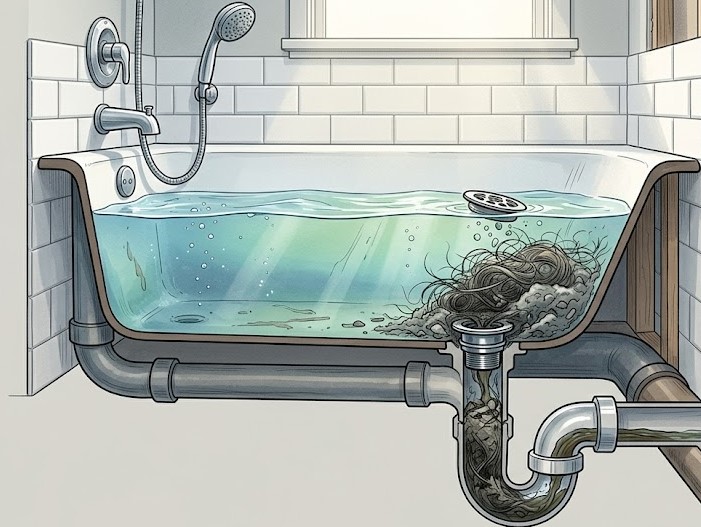
Sometimes the toilet itself is just showing a symptom, while the source of the problem lies deeper. If there is already a solid blockage, a narrowing, old buildup, or a malfunction further down the drain line, a clog will form in the toilet drain that cannot be cleared by a regular flush or a plunger. In such cases, the water may drain and then back up again, creating a false impression that the problem is almost solved.
Worst of all, a clog in the toilet plumbing is not always limited to a single point. If the problem is related to the main line, an old pipe, or a deeper section of the system, the symptoms may recur and quickly return after what seems like a successful unclogging. Here, it’s important not to overestimate household methods: sometimes the problem isn’t in the bowl anymore, but rather that further down the system, the water simply has nowhere to go.
4 Ways to Unclog a Toilet That Won’t Flush
When water is pooling in the bowl, the key is not to jump from one random tip to another. The right approach here is simple: try the safe methods first, then move on to tools—not the other way around. This makes it easier to understand how to unclog a toilet without unnecessary risk to the plumbing and without trying to force a solution on the first try.
And yes, the best way to unclog a toilet doesn’t depend on some fancy tip from the internet, but on how dense and deep the clog itself is.
Use the plunger correctly
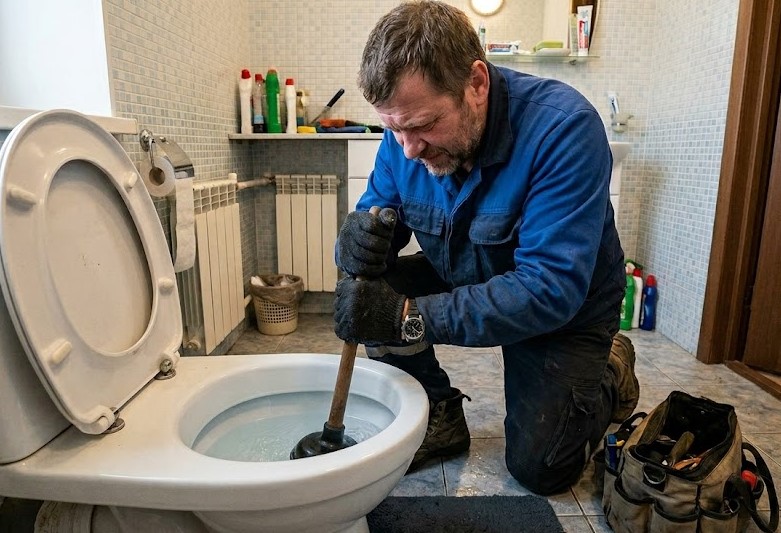
A plunger works not because it “pushes down,” but because it creates the necessary movement of water and air in the drain. You “press” it against the drain opening to create a vacuum, give it a few firm pumps, and only then pull it away sharply.
The mistake here is usually the same: working too gently, too quickly, or positioning it incorrectly. Then the pressure is lost, and the clog remains just as it was.
Try hot water and dish soap
If the clog isn’t “rock-hard” but rather loose and greasy, dish soap sometimes helps. It reduces friction within the mass, and hot water helps soften it.
This is often the first step in unclogging a toilet yourself when you don’t want to reach for the plunger right away. This isn’t magic or a universal solution, but it can be useful for fresh clogs. In some cases, it can clear a toilet clog fairly quickly if the problem hasn’t gone too deep yet.
Use a plumbing snake
When a plunger and hot water with dish soap don’t work, it’s time to bring out the tool—the snake. It reaches deeper and helps either “hook” the clog or push it further down the line so that the water flows normally again.
But precision is key here: no sudden jerks and no trying to twist everything with such fury as if you’re waging a personal war against the pipe. Properly clearing a toilet clog with a cable often works where regular toilet unclogging methods have failed.
Use a baking soda and vinegar solution
One of the most “traditional” ways to unclog a toilet without a plunger is a baking soda and vinegar solution. Yes, it won’t remove a deep blockage caused by a foreign object, but for light buildup or fresh debris, it can sometimes help loosen the clog—and that’s half the battle. But don’t expect miracles here: this is more of a careful preparatory step than a substitute for tools or professional help.
What NOT to Do If Your Toilet Is Clogged
The first mistake is flushing repeatedly in the hope that the water will “push it through on its own.” In practice, this is often what causes the toilet to overflow: the drain is already blocked, so the new water just raises the water level in the bowl and makes the situation worse.
The second bad idea is to immediately pour in harsh chemicals without understanding exactly what the blockage is. If there’s a solid clog or a foreign object inside, the corrosive solution won’t dissolve it, but it can damage the pipes and seals.
You shouldn’t just ignore the problem either. If the toilet isn’t flushing properly for the first time, it rarely resolves on its own. Usually, this is a sign that either a clog is building up inside or the problem lies deeper in the line. The longer you wait, the higher the chance that this minor household issue will escalate into a full-blown emergency.
When to Call a Professional Plumber
If “folk remedies” and home remedies haven’t worked, the water is still standing in the bowl, or the problem returns after a couple of days, it’s best not to wait any longer. The same recurring clog in the toilet usually indicates not a random blockage, but a deeper underlying cause.
In such cases, you need a professional plumber, not another round of plungers, chemicals, and wishful thinking. The same applies to situations where several drains are malfunctioning at once, you hear gurgling in the system, or you suspect a problem further down the line.
This is where DIY unclogging easily reaches its limit. If you delay seeking professional help, there is a 100% chance you’ll end up needing emergency toilet unclogging—and that’s a whole different level, including in terms of cost.
How Pryde Group Can Help
When a toilet stops flushing properly, Pryde:
- Responds quickly. The longer water sits in the bowl, the higher the chance that a minor issue will escalate into an unpleasant emergency. That’s why not only the unclogging itself matters, but also how fast we arrive;
- Professional tools. For dense and deep clogs, you need proper equipment—not random household tricks—to remove the blockage carefully and without unnecessary risk to the plumbing;
- Long-term solutions. Our plumbers look not only at the clog itself but also at the cause of the problem. If the problem recurs, it’s important to identify the weak spot: in the toilet bowl, in the drain line, or deeper within the system.
- Emergency support. When the situation has gone beyond “we’ll deal with it later,” you need help without delay. In such cases, experience, a calm approach, and an understanding of how to quickly restore the system to normal are all crucial.
With Pryde Group, it’s not just about a one-time cleaning at any cost. The goal is different: to resolve the issue thoroughly and ensure it doesn’t return with the very next flush.