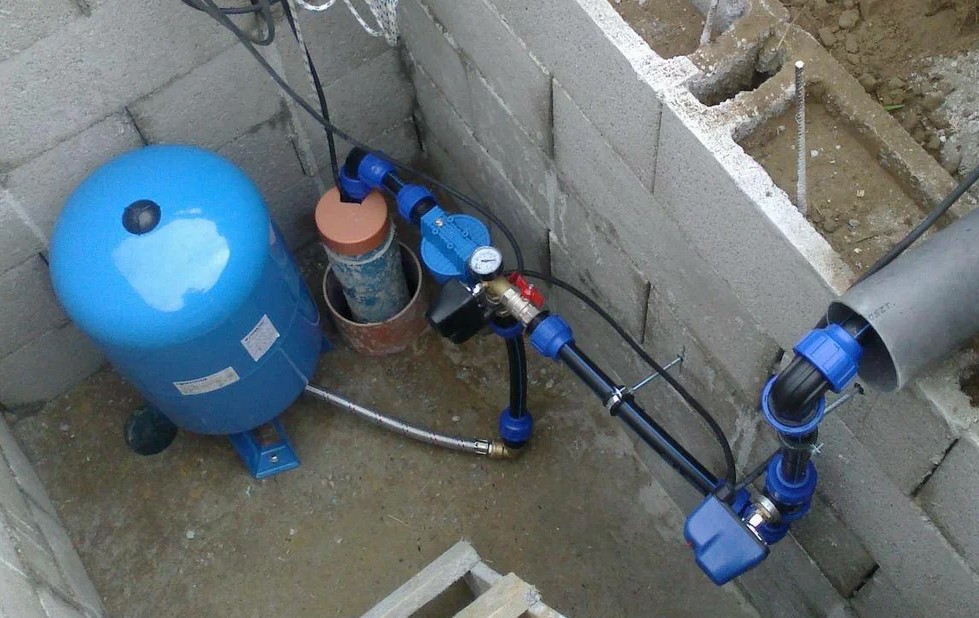
Well water has a good reputation. It offers your own source, independence, and no risk of city-wide water outages. On the other hand, this self-sufficiency has its downsides: you’ll have to monitor the water quality yourself. It often contains suspended solids and iron, is harder, and can have an odor—which is especially noticeable in the shower or kitchen. All of this affects not only the taste of the water but also your pipes, water heater, appliances, and overall comfort at home.
Therefore, choosing a water treatment system isn’t about a nice-looking casing or a generic online rating. A good solution must address real problems. So let’s break down three types of well water systems, see how they differ, where each one truly helps, and why it’s important for homeowners to have not just a filter, but a clear plan for protecting drinking water, household appliances, and the entire home plumbing system.
Why well water purification systems are necessary
Problems with well water almost never boil down to a single characteristic. Yes, it may be clear, but at the same time leave sediment in the system, stain plumbing fixtures, smell like sulfur, or contain bacteria that are invisible without testing. That is why well water purification systems are installed not as a formality, but for safety.
A particular challenge is that impurities act in different ways:
- Mechanical suspended solids wear down valves and filters;
- Iron and manganese spoil the taste and appearance of the water;
- Hard minerals accelerate scale formation;
- Bacterial contamination can cause health problems.
Therefore, improving the quality of well water cannot be reduced to a single universal cartridge: what is needed here is a system that addresses specific issues related to the water’s composition, rather than simply promising a general effect.
How thoroughly is water testing and quality assessment conducted?
Filter selection begins not with a catalog, but with an analysis. Without it, any solutions for water supply from private wells remain a guess: you can buy an expensive system and still fail to address the real problem.
Typically, water is tested for iron, manganese, hardness, pH level, turbidity, hydrogen sulfide, bacteria, and other indicators that affect both safety and equipment performance.
For a homeowner, it is not the test itself that matters, but its practical significance. The analysis shows whether only mechanical filtration is needed, or if iron removal, water softening, or UV disinfection should be added. In other words, removing contaminants from well water should be based on data, not on smell, color, or advice from the internet. It is the assessment of water composition that distinguishes a proper system from a random assortment of filters.
The Three Best Well Water Filtration Systems: An Explanation
There is no single clear leader here, but three types of solutions are most commonly used for residential applications. They address the main risks: mechanical impurities, iron and hardness, as well as bacterial contamination.
Well Water Sediment Filtration Systems
A sediment filter for well water is installed where the system contains sand, silt, rust, and other suspended solids. It traps particles at the inlet and reduces the load on plumbing fixtures, valves, the water heater, and subsequent stages.
Often, this is where a home well water filtration system begins, because without mechanical filtration, the remaining components wear out faster and operate less reliably.
Iron and hardness removal systems
A system for removing iron from well water is needed where the water leaves rust-colored stains, has a metallic taste, and gradually damages plumbing fixtures. Such equipment is selected based on analysis, because the concentration of iron and associated impurities can vary significantly from home to home.
If limescale is also a problem, a well water softening system is installed. It reduces the strain on pipes, heating elements, and household appliances, which are usually the first to indicate that the water in the home is too hard.
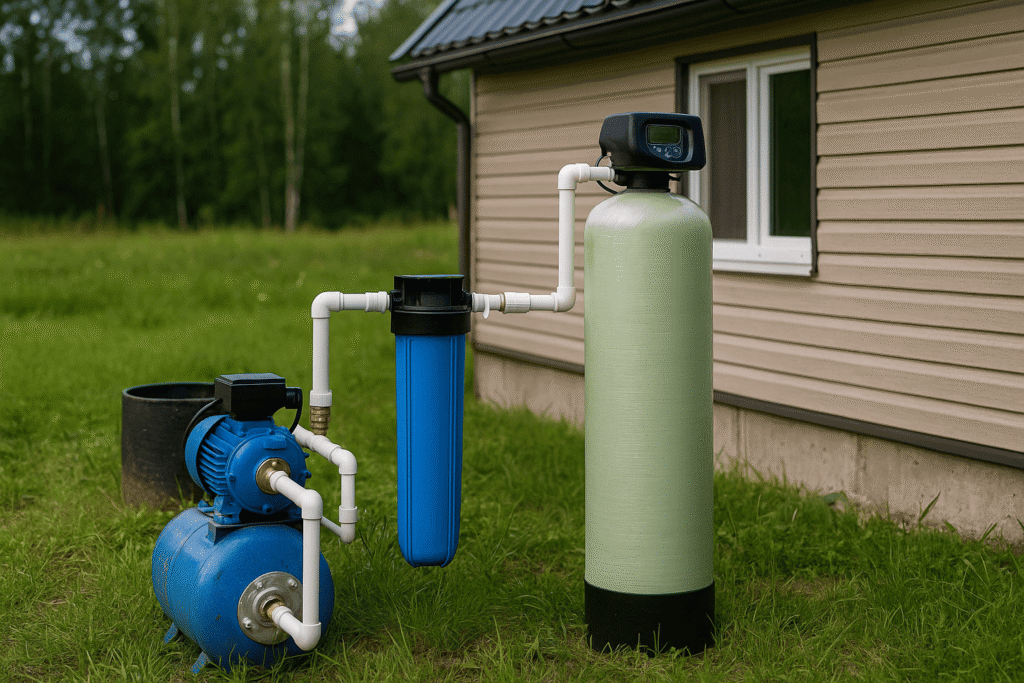
UV irradiation and water disinfection systems
A UV water purification system works differently: it doesn’t trap sand or remove iron, but rather disinfects the water flow by killing bacteria and viruses. This solution is especially important for private water sources, where health risks aren’t always detectable by taste or smell.
Typically, such a well water purification system is not installed on its own, but in combination with pre-filtration. First, suspended solids and other interfering impurities are removed, and only then is the UV stage connected to ensure effective disinfection.
Whole-house water supply systems vs. water supply systems from individual wells
The difference here lies in the scale of the task. A whole-house water filter for well water is installed at the inlet to protect the entire plumbing system and appliances at once. This option treats the entire volume of water consumed in the home and is especially useful where impurities affect not only drinking water but also showers, laundry, heating equipment, and pipes.
Local systems address a more specific need: they are installed at a single point, usually in the kitchen, when you need to further purify water specifically for drinking and cooking. This is useful, but it does not replace protection for the entire home system.
Therefore, the best well water purification system depends not on a flashy name, but on whether you want to cover a single point of use or the entire house at once. In many cases, these solutions are not mutually exclusive but work in tandem.
How to Choose the Best Well Water Purification System
The most common mistake is simple: people choose a system based on recommendations from friends or because the product description says “suitable for a private home.” But this is a recipe for failure, because your neighbors’ water might contain iron, yours might be hard and smelly, and across the street, the main problem might be bacteria.
The best well water filtration system is almost never chosen based on someone else’s example. First and foremost—analysis, and only then—a few practical questions:
- How many people live in the house?
- How much water is used per day?
- How many bathrooms are in the house?
- Is there a water heater and equipment sensitive to scale?
- Are the owners prepared to maintain the system regularly?
Essentially, well water treatment in a residential home is selected not for an abstract source, but for a specific lifestyle. This way, you won’t have to overpay for unnecessary stages or later purchase what was missing from the start.
Installation and Maintenance Requirements
Even a good system loses its purpose if it is installed without considering pressure, water flow, and space in the piping. For some solutions, the correct sequence of stages is important; for others, a stable flow, regular flushing, or a separate connection to the drain. An installation error usually ends up costing more than the savings on the day of purchase.
Maintenance should not be put off either. Cartridges are replaced based on their service life, filters are checked based on their condition, and UV lamps are replaced at the end of their service life, even if everything looks normal visually. When maintenance is neglected, the system first loses its effectiveness and then begins to create a false sense of security.
The Benefits of Proper Well Water Treatment
The benefits of a good system aren’t limited to what’s in your glass. Improvements in well water quality are usually evident in several ways: unpleasant odors disappear, plumbing fixtures accumulate limescale more slowly, appliances last longer season after season, and using water in the home is simply more pleasant.
Equally important is that purifying drinking water from a well reduces household risks, which are often underestimated in private homes. Cleaner water for the kitchen and shower means less strain on pipes and the water heater, and lower costs for repairs and equipment replacement. In the long run, this isn’t just about comfort, but also about tangible savings.
Final Recommendations for Homeowners
A good system doesn’t aim to “be number one for everything.” Its goal is simpler and more straightforward: to address the specific issues present in your water and not create new ones during maintenance. Therefore, you should choose not based on the volume of advertising, but on analysis, your household’s water consumption, and how convenient it will be to live with this system for years to come.
If you have a private water source, it’s best not to guess based on color, smell, or advice from forums. A single professional water test usually saves more money than the costs of mistakes with unsuitable filters, unnecessary stages, or weak protection. For a homeowner, this is the most sensible approach: first understand the water’s composition, then build a system tailored to your home’s actual conditions.