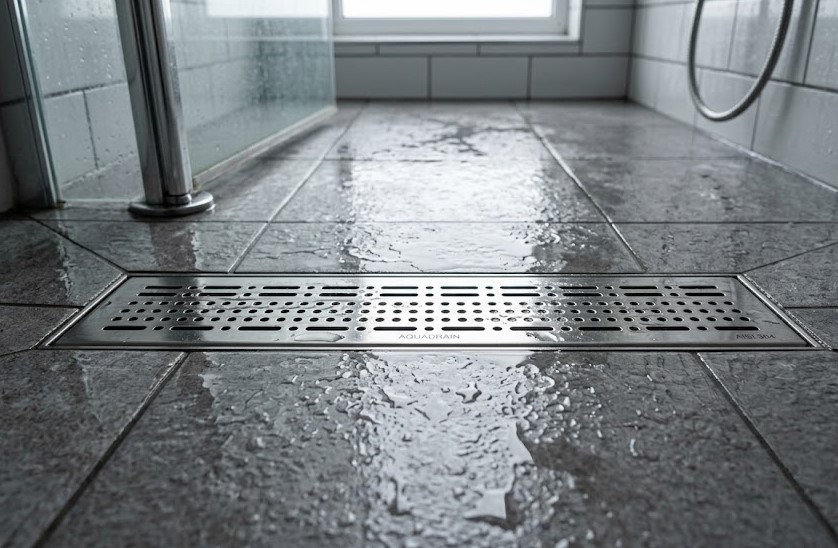
A shower drain has a thankless job, to put it mildly: every day, it collects everything we tend to ignore in the bathroom. Hair, shampoo residue, soap scum, sand and fine dirt from our feet, and mineral deposits from the water. Individually, these are trifles, but together they form a dense mixture that clings to the drain grate and the inside of the pipe and, over time, begins to choke the flow.
That’s why a clogged shower drain usually doesn’t appear out of nowhere. It’s more likely the result of someone neglecting maintenance. And this usually results in a clog, which is quite a hassle to clear. To avoid letting things get out of hand, it’s best to understand what causes the clog, how to tell when it’s time to clean the drain, what you can try on your own, and when it’s better not to mess with it yourself but to call a plumber right away.
Why do shower drains get clogged?
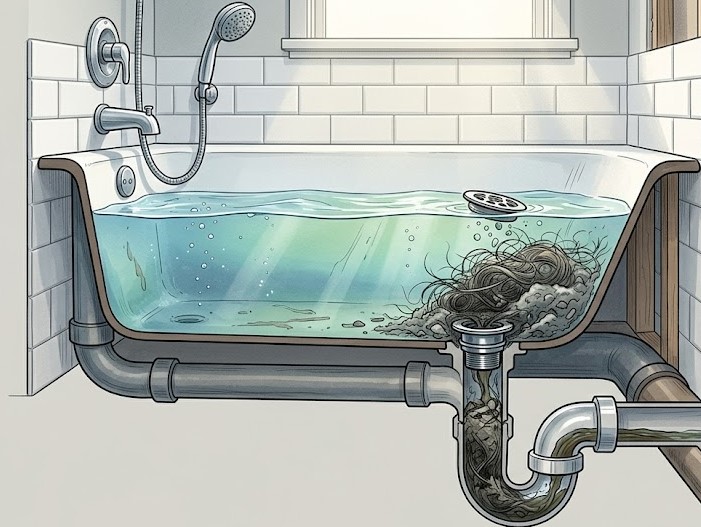
A normal water flow is rarely blocked by just one thing. Much more often, a clog in a shower drain builds up in layers:
- First, a bit of hair and sticky soap scum get caught behind the grate;
- Then particles of dirt, cosmetics, and grime stick to them.
And the water can no longer flush this clump down the pipe properly. This is how a blockage forms, which at first simply slows down the flow, and then begins to trap water in the shower tray.
Given that the shower is used frequently, the drain is almost never cleaned regularly. Because of this, a dense, damp, and very “sticky” environment gradually forms inside, in which new debris gets trapped even faster.
And that’s why a shower drain blockage usually doesn’t happen suddenly. It builds up little by little, day after day, until the usual household flow turns into a persistent clog.
Common causes of shower drain clogs
To put it simply, a household clog in the shower usually has three components:
- The first collects debris;
- The second binds it into a dense mass;
- The third helps this mixture get stuck inside.
Individually, all of this seems harmless. Together, however, it creates a blockage that causes the drain to work sluggishly and with an annoying delay.
Hair Buildup
The main culprit in this story, as cliché as it may sound, is hair. It doesn’t dissolve, easily gets caught in the drain grate and internal ridges, and then starts to act like a mesh. Small debris settles on it, product residue sticks to it, and gradually a dense clog forms in the shower drain that can no longer be flushed away by a normal stream of water.
When you have to remove hair from the shower drain, it usually becomes clear that the problem has long since gone beyond a few stray strands. Here, hair isn’t just debris—it’s the foundation holding the entire clog in place.
Soap scum and residue
The second common cause of clogs in the shower drain is soap scum and cosmetic residue. Shampoo, shower gel, conditioner, scrub, and cream-based products don’t flush down the drain perfectly clean. Some of them settle inside as a thin layer that’s barely noticeable at first, but then starts collecting everything in its path, including that very hair.
This is the second component of the clog causing slow drainage in the shower drain. Water still drains, but not as easily as before. To a person, this seems like a minor issue, but for the pipe, it’s a sign that a sticky and increasingly stubborn clog is forming inside.
Mineral deposits and dirt
If the water is hard, mineral deposits form more quickly on the walls. They make the pipe’s surface rougher, and everything else clings to it more readily. Added to this are sand, soil particles, and fine dirt that get into the shower from your feet, slippers, or after cleaning the bathroom.
That’s why cleaning the shower drain isn’t just necessary when water is already standing in the shower pan. Regular maintenance of the shower drain helps remove scale and sediment before they become a breeding ground for a new clog.
Signs of a clogged shower drain
When the shower drain doesn’t drain water, that’s a problem. But “warning signs” appear long before it happens:
- Water drains more slowly than usual;
- A puddle remains in the shower pan after showering;
- An unpleasant odor comes from the drain;
- Water drains in spurts or you hear gurgling;
- The clog returns quickly even after flushing.
This usually means that the shower drain is clogged beyond just the grate. And the sooner you notice this, the better your chances of avoiding professional help.
How to Unclog a Shower Drain
There’s no need to get too fancy here: start with “gentle and safe” methods, and only then move on to the “heavy artillery.” If you take your time, you can often clear a superficial clog without risking damage to the pipe, the trap, or the shower enclosure’s finish.
Simple DIY methods
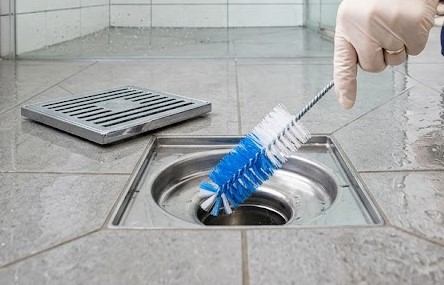
When looking for ways to unclog a shower drain, basic tools usually do the trick. Start by removing the drain grate and manually clearing away anything visible on top: hair, slime, and small debris. After that, you can try hot water, if the pipes allow it, or carefully use a plunger to push the clog closer to the drain.
Another option that often works for household clogs is a flexible plumbing cable or a simple hair-removal tool. In mild cases, a mixture of baking soda and vinegar followed by a water rinse can help, provided the clog hasn’t become too dense yet.
This DIY shower drain cleaning method is appropriate when the problem isn’t severe and water is draining, at least slowly.
When simple methods don’t work
Not every clog can be cleared by hand. If the water stands for a long time, the odor returns quickly, and the effect lasts only a day or two after cleaning, the problem is most likely deeper. In such cases, the best way to unclog a shower drain goes beyond hot water and manually cleaning the grate.
The same applies to situations where the drain gets clogged again and again, yet it looks almost clean under the grate. In that case, the question of how to clear a clog in the shower stall is no longer about debris on top, but rather a solid blockage further down the line or a clogged trap—a place you shouldn’t try to tackle blindly without the right tools.
When to Call a Professional Drain Cleaning Service
Not every clog is worth “fighting” on your own. If, after cleaning according to the instructions, the water still drains slowly, the unpleasant odor returns, and the drain starts acting up again in a day or two, the problem is most likely deeper.
In such cases, professional drain cleaning is no longer just a precaution. It’s simply a more sensible approach than making a tenth attempt with a plunger and hoping for a miracle. It’s also worth calling a professional when there’s a risk of damaging the system itself. For example, if the shower drain has already been disassembled, if the shower pan is awkwardly positioned, or if you suspect a solid blockage in the trap or further down the pipe.
This also applies to situations where water constantly pools, you hear gurgling, or there are signs of a leak. In such cases, it’s no longer just about a clog, but also about a potential repair to the shower’s plumbing, which is best not to turn into a DIY experiment.
How Pryde Group Can Help with Shower Drain Problems
When a shower drain starts to malfunction, it’s important not just to force the water through, but to identify exactly where the problem lies and why it has recurred. Pryde Group begins by assessing the entire situation.
- First, a professional diagnosis is conducted: technicians assess the condition of the drain grate, the trap, and accessible sections of the pipe, and check for signs of deeper blockages, buildup, or damage inside the system. This allows us to avoid guesswork and proceed logically right away;
- Next, a safe and effective drain cleaning is performed. Without unnecessary roughness, without trying to force everything through, and without amateur heroics—which sometimes result in having to repair not just the clog, but the drain itself. If the problem is at the inlet, accumulated debris and buildup are removed;
- If the clog is deeper, a method is selected that truly suits the specific shower enclosure and does not cause further damage.
A distinct advantage is that the job doesn’t end with the phrase “the water’s flowing again.” Pryde Group also examines the causes of recurring clogs: how quickly hair accumulates inside, whether there’s a significant soap buildup, how much hard water contributes to the problem, and whether the drain is designed in a way that causes debris to collect there particularly easily. As a result, the customer receives not just a one-time cleaning, but also long-term preventive maintenance, which helps avoid facing the same problem again in a couple of weeks.
And, of course, all this is done by experienced specialists for whom a shower drain clog isn’t a once-in-a-lifetime event, but a routine task. In this line of work, that’s important. Because the difference between “seems like it’s cleared” and “the drain is working normally again” usually comes down to experience, precision, and understanding the system.
How to Prevent Clogs in a Shower Drain
It’s easier to prevent a clog than to take it apart piece by piece later. The good news is that prevention doesn’t require a special plumbing ritual that takes half a day. A few simple habits are enough to significantly reduce the risk of a sticky mass of hair, soap, and grime building up inside again:
- Install a mesh screen or filter over the drain. This is the simplest way to prevent clogs in the shower drain, because most of the hair and large debris stays on top instead of going inside;
- Remove hair immediately after showering, rather than waiting until it has formed a wet clump;
- Rinse the drain with hot water every few days, if the pipe material allows it;
- Do not rinse shower scrub residue, dirt from cleaning, or anything else that might settle inside down the drain;
- Periodically remove the grate and clean the visible part of the drain of any buildup;
- Don’t put off minor cleaning if the water starts draining slower than usual.
These measures seem too simple to take seriously. But they are the very foundation of proper shower drain maintenance.
When the drain is cleaned little by little and on time, it doesn’t reach the point where you need a cable, disassembly, or a plumber. And in household plumbing, to be honest, this is the best-case scenario: less heroics, less dirty work, and fewer chances of suddenly turning a regular shower into a small pool.