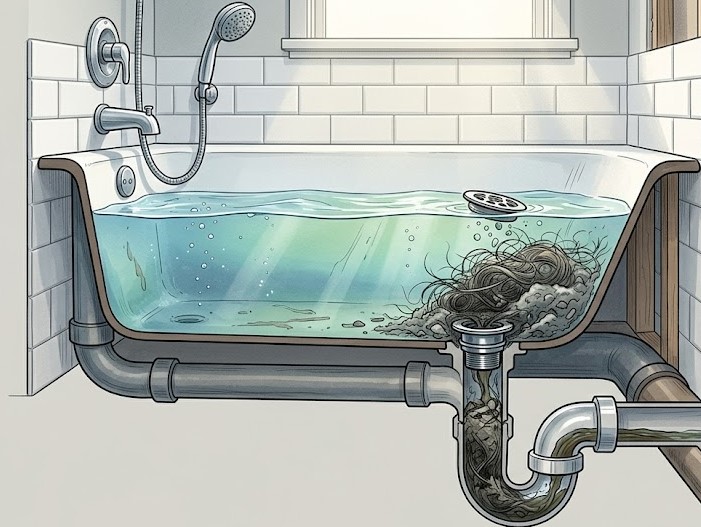
After a shower, the water should drain almost immediately. But if it pools at your feet, swirls in the drain for too long, or leaves a cloudy residue around the drain grate, it won’t clear up on its own. Over time, the bathtub drains more and more slowly, the odor lingers longer, and eventually everything comes to a standstill. Completely.
But any clog builds up gradually: hair catches soap scum, and shampoo, gel, or soap residue sticks to it; all of this “traps” dirt and small debris, while hard water eventually adds thick deposits to the pipe walls.
But if you take the time to learn how to unclog a bathtub drain in advance, you can avoid serious damage. After all, the sooner you address the cause, the less likely it is to lead to a severe clog, recurring drain issues, and a problem that’s no longer just a minor inconvenience but a full-blown issue.
Why Bathtub Drains Get Clogged
A clog is a story of “accumulation.” Every day, water carries hair, soap and cosmetic residue, and small debris into the drain. All of this clings to the inner walls of the pipe, mixes into a dense mass, and eventually manifests as a clogged bathtub drain. From the outside, it doesn’t seem like a big deal: the water just drains a little slower. But inside, the passage for it is already narrowing.
In addition, if the water in the system is hard, mineral deposits gradually build up on the walls. They don’t cause a clog on their own in a single day, but they “help” the dirt stick around. That’s why a typical bathroom clog often results from several factors at once:
- Hair forms a plug;
- Soap scum acts like glue;
- Deposits in the pipe reduce its internal diameter.
It is precisely because of this combination that the drain can function tolerably for weeks, and then suddenly switch to “water standing still and going nowhere” mode.
Common causes of a clogged bathroom drain
A household clog almost always has a specific composition. It’s rare for a pipe to “just get clogged” for no reason: in one case, a dense clump of hair and soap scum builds up inside; in another, the passage is gradually narrowed by cosmetics, grease residues, and dirt that settle on the walls. Sometimes mineral deposits are added to the mix, causing any new debris to stick faster and hold on tighter.
That’s why it’s important not to view a clog as the same problem in every home. For some, the drain starts to “slow down” due to long hair and thick hair care products. For others, a combination of hard water, old pipes, and infrequent maintenance is the culprit. But generally speaking, there are three most common causes that usually lead to slow drainage, odors, and water that sits longer than usual or doesn’t drain at all.
Build-up of hair and soap scum
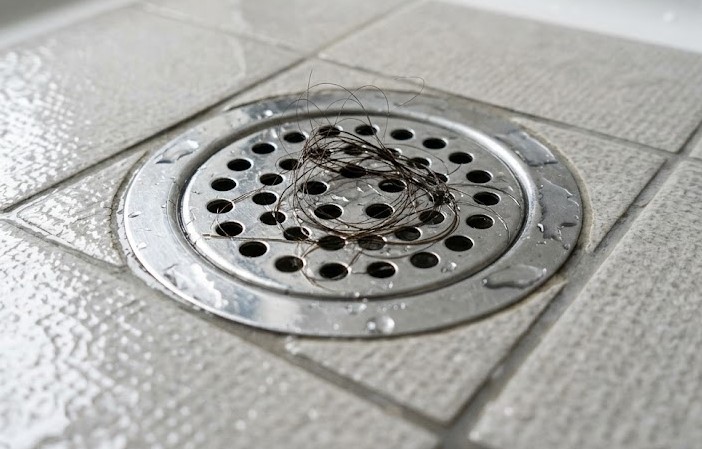
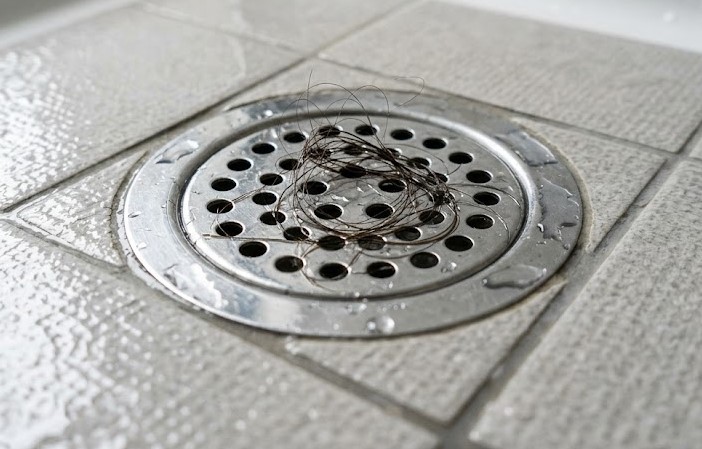
This is probably the most common scenario. Hair alone doesn’t always completely block the drain, but it clings easily to internal ridges, the drain grate, and existing buildup. Soap residue, shower gel, and fine dirt then stick to them, and a dense clump gradually forms inside. At some point, the bathtub drain becomes clogged not just figuratively, but quite literally: the water drains worse and worse, while the plug holds tighter and tighter.
That’s why simply “rinsing the tub from the top” often yields no noticeable results. If such a clump has already formed inside, you’ll need not only to flush it out but also to remove the hair from the drain, which holds all that sticky layer in place. Without doing this, the clog might loosen slightly for a day or two, but it will quickly return. This happens especially often in places where the bathtub is used regularly and no one cleans out what accumulates around the drain grate at least from time to time.
Dirt, oils, and product residues
Not all clogs are caused solely by hair. After all, things that aren’t perceived as separate debris regularly go down the drain: shampoos, conditioners, body oils, and scrub residue—all of this gradually settles on the walls, layer by layer. Then new dirt sticks to the sticky surface, and the pipe’s passage narrows.
This is exactly why different methods for unclogging a bathroom drain work differently: in some cases, you need to remove a solid plug, while in others, you must first remove the greasy, soapy buildup that holds everything in place.
The insidious thing about this problem is that it builds up slowly, especially if the drain is used frequently and no one remembers to perform basic maintenance on the bathroom drain. From the outside, everything may look almost normal, but the water no longer drains as freely as it used to. And this gradual nature is the most insidious part: while the clog isn’t yet complete, it’s easy to underestimate it and miss the moment when routine maintenance no longer helps.
Mineral deposits and hard water
The problem may not be hair or cosmetics per se. If the water is hard, minerals gradually build up inside the pipe. They don’t block the drain instantly, but they gradually narrow the passage, roughen the walls, and help new deposits stick faster. As a result, slow drainage in the bathtub can drag on for weeks: the water still drains, but noticeably worse, and after a shower, you get the feeling that the system is struggling.
That is exactly why a clog in the bathtub drain doesn’t always look like a solid plug that can be pulled out in one go. Sometimes there is already a layer of deposits inside, on which everything else is held. In such a situation, even after partial cleaning, the effect may be temporary. The passage seems to clear up, but if the pipe walls are already coated with minerals, new buildup and small debris accumulate there much faster.
Signs of a Clogged Bathtub Drain
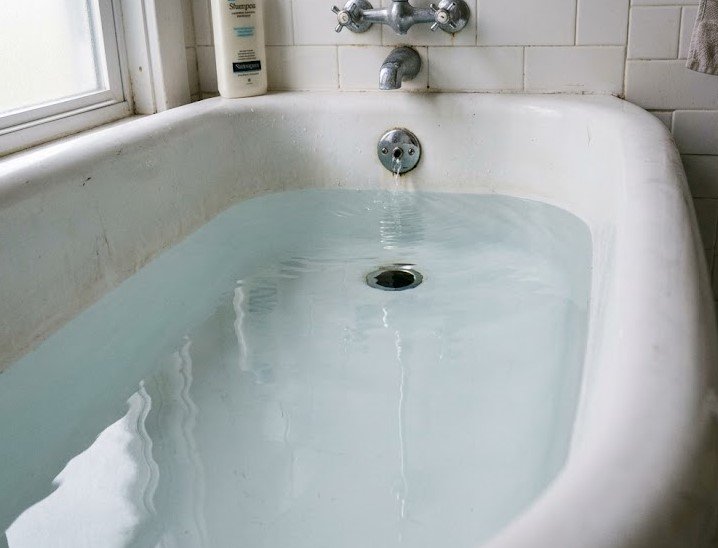
At first, the water drains more slowly than usual. Then a murky film begins to accumulate around the drain grate; after a shower, you hear gurgling, and the musty smell doesn’t go away even after a day. If you ignore this, the point when the bathtub drain stops draining altogether arrives without much warning.
There are also earlier warning signs: the water swirls slowly, drains in spurts, or rises above the drain grate for a few seconds before finally flowing away. This means there’s already a buildup inside that’s blocking the flow. And the sooner you notice it, the easier it is to fix without a major overhaul.
How to unclog a bathtub drain
Don’t immediately resort to drastic measures and bring out the “heavy artillery.” It’s better to start with gentle methods and move on to more serious ones. After all, if you catch it in time, you can unclog the bathtub drain without dismantling anything, using hot water, household cleaners, or mechanical pressure.
The best way to unclog a bathtub drain is prevention, but if you’ve missed the opportunity and household remedies don’t help, it’s time to reach for special tools. Or even call a plumber.
After all, the question of how to clear a clog in a bathtub drain isn’t always solved with a single universal method. Fresh buildup and a superficial blockage are easier to remove. A dense clump of hair, soap, and deposits requires a different approach.
Simple methods worth trying first
If the clog hasn’t gone too deep yet, it’s best to start with household “tricks.” The simplest is to clear the bathtub drain yourself—that is, to remove the debris blocking the water from draining. If that doesn’t help, you can carefully pour hot water down the drain. But keep in mind: if the pipes are old or sensitive to sudden heat, don’t overdo it. And even with “fresh” soap scum, this method sometimes noticeably improves water flow.
Next, you can try a natural method to unclog the bathtub drain using “household” items. This method works when there isn’t a solid clog inside yet, and the main problem is buildup and sticky residue. Basically, we’re talking about baking soda and vinegar for the bathtub drain.
These methods don’t solve every single case, but as a first step they’re usually sensible and safer than immediately pouring in harsh chemicals.
Using tools to unclog drains
If the water barely drains or household methods have had little effect, it’s time to bring out the tools. The most straightforward option here is a plunger, which creates pressure and “pushes through” the clog.
The next option is a drain snake for unclogging the bathtub drain. It helps reach deeper, hook onto a hair clog, and pull out what neither hot water nor a plunger can dislodge. But you need to use it gently: without sudden jerks and without trying to force your way through the pipe as if it were a contest of wills.
These tools are useful when you need to actually clear a clog in the bathtub drain, not just “loosen” it. But even here, there are limits. If there’s already a solid, old clog inside or the pipe bend is blocked deeper, a household drain snake might not fully resolve the issue. In this case, it’s important not to overdo it, so as not to damage the connections or push the clog even further in.
What to Avoid When Clearing a Clogged Drain
The main mistake is the desire to solve everything quickly and forcefully. When faced with a stubborn clog in a bathtub drain, people often pour several harsh chemicals down the drain one after another, add boiling water, and then try to force everything through with tools. This “set of mistakes” easily damages pipes, gaskets, and connections. This ends particularly badly in older systems: excessive force can easily damage the pipes, leading to entirely different repair costs.
You should also be careful with household chemicals. Yes, they’re seen as the simplest way to unclog a bathtub drain, but that doesn’t mean the solution is safe for every system or every type of pipe. It’s also not a good idea to endlessly repeat the same method if it’s not working. When a clog won’t budge, it’s better to stop and assess the situation objectively than to turn a routine cleaning into a repair job requiring part replacements.
When to Call a Professional Plumber
Not every clog is worth “fighting to the bitter end” on your own. If the water barely drains, the clog returns after a few days, a foul odor lingers, and moisture appears under the sink or near the joints, this is no longer a situation where another round of baking soda, vinegar, and hope will help. In such a situation, professional drain cleaning is usually required: with proper diagnostics, the right tools, and an understanding of exactly where the problem lies.
The same applies to old pipes, deep clogs, and cases where, after a DIY cleaning, the drain seems to have come back to life—but only temporarily. If there are already solid deposits inside, a section of the line is damaged, or the clog has moved further down the system, DIY methods are just a waste of time. In that case, it’s wiser to call a professional right away and get a plumber’s help with a clogged bathtub before the situation goes from inconvenient to expensive.
How Pryde Group Can Help with Plumbing Problems
When a clog refuses to budge, Pryde Group doesn’t just “try a plunger on a whim,” but instead follows a systematic approach. Our specialists:
- Conduct a professional inspection of the drainage system to pinpoint the actual source of the problem rather than guess;
- Carefully and effectively clear blockages without unnecessary risk to pipes and connections;
- Offer solutions not just “for now,” but for the future, so the drain doesn’t get clogged again in a week;
- Are skilled at handling both typical household blockages and more “stubborn” cases.
If the water drains slowly, the odor persists, and home remedies have only provided temporary relief, it’s best to address the issue right away. It’s better for your pipes and your peace of mind. And it’s easier on the family budget.